Unification Crew
Company:
Stori
Role:
Lead Product Designer
Location:
Mexico City
Date:
2025
When Stori’s product ecosystem started feeling disjointed — with each product growing its own identity — I saw an opportunity: what if design could help bring it all together? I started the Unification Crew, a bottom-up initiative where senior designers met weekly to imagine what a unified experience could look like. No mandates — just shared curiosity and alignment.
I led the vision and momentum: organizing workshops to align product goals, hosting visual syncs to unify tone and interaction, and partnering with the Design System Tech Lead to ensure scalability. The outcome was collective, but I built the structure, rhythm, and belief that made it possible.

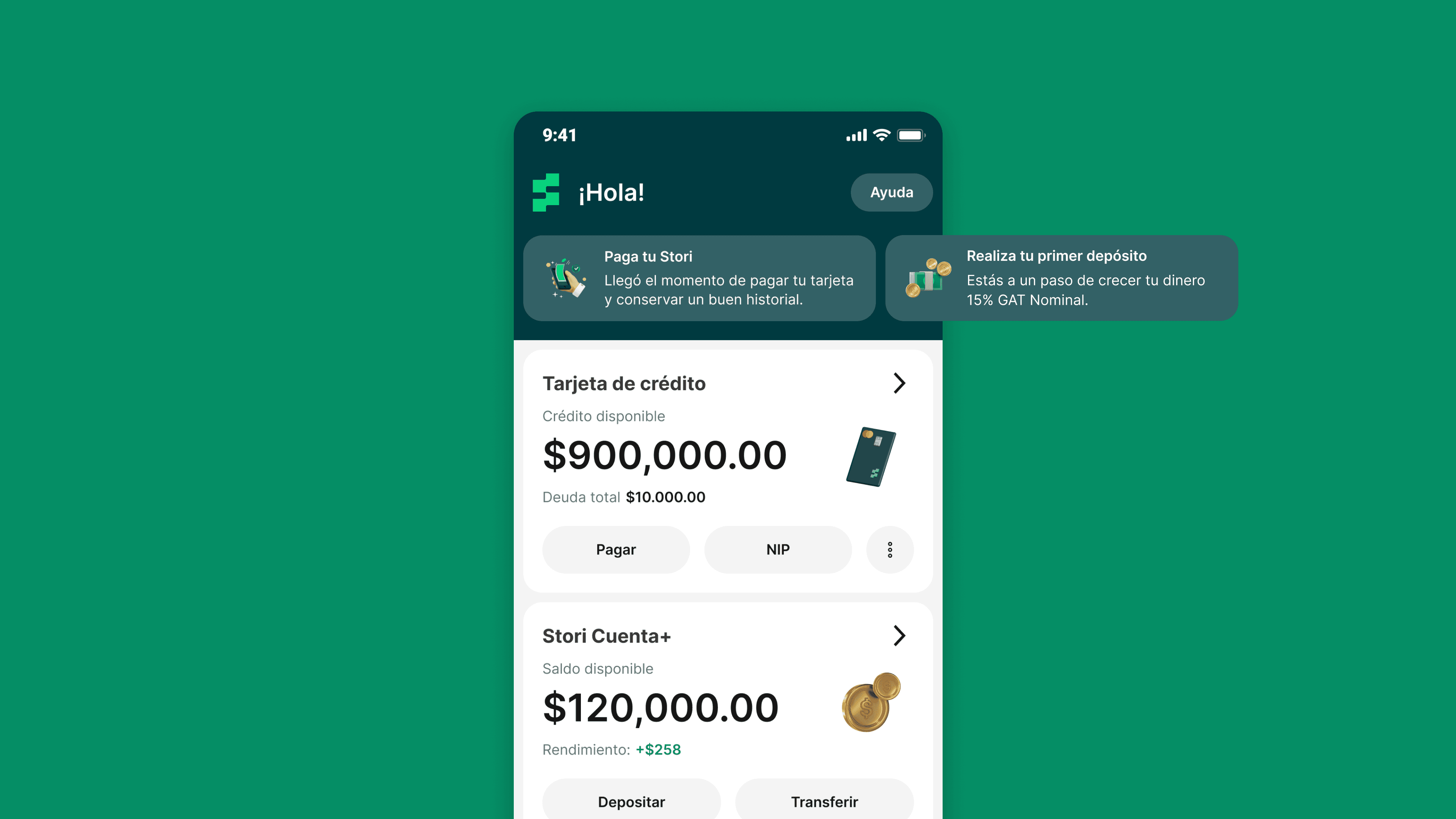
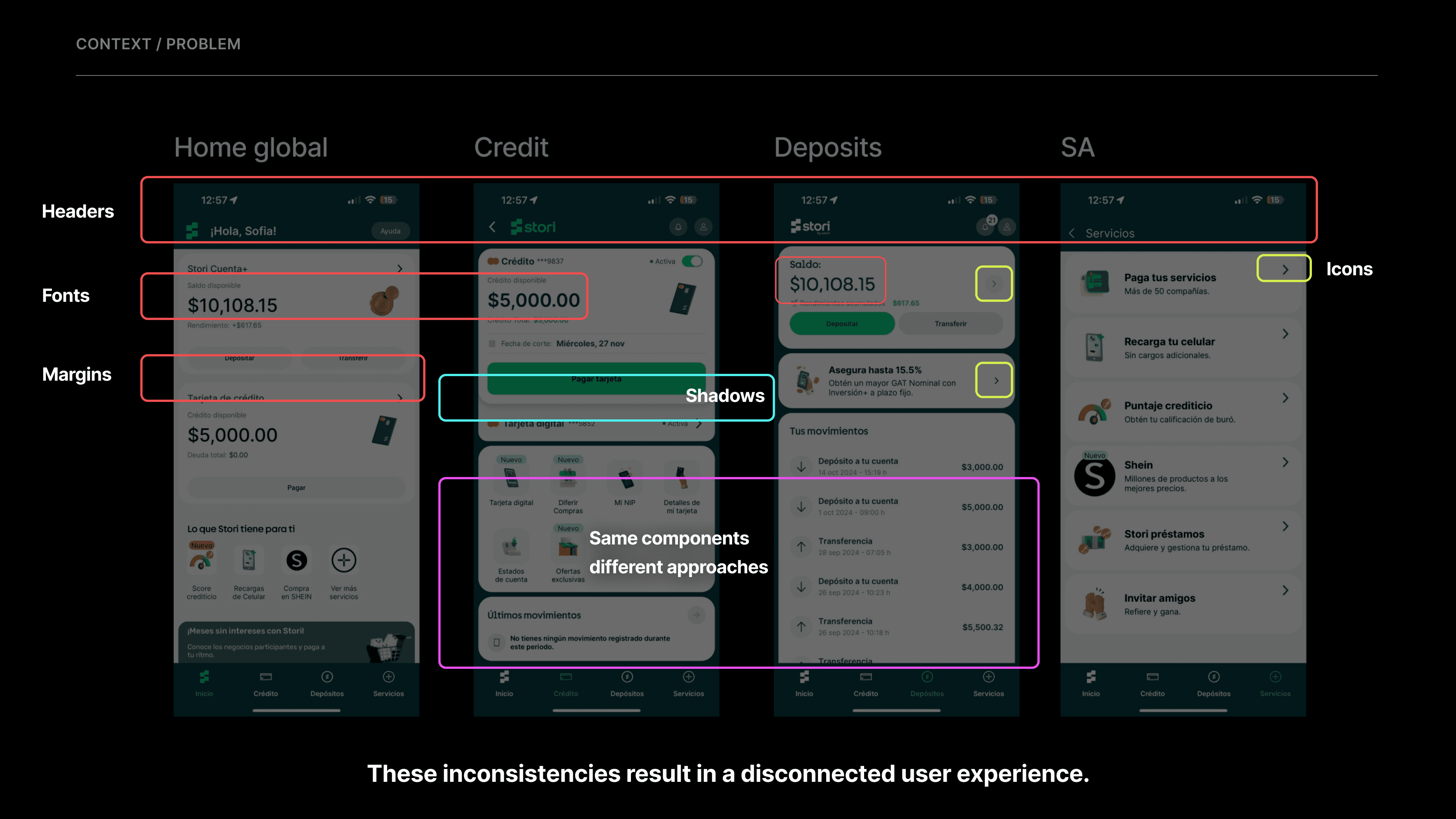
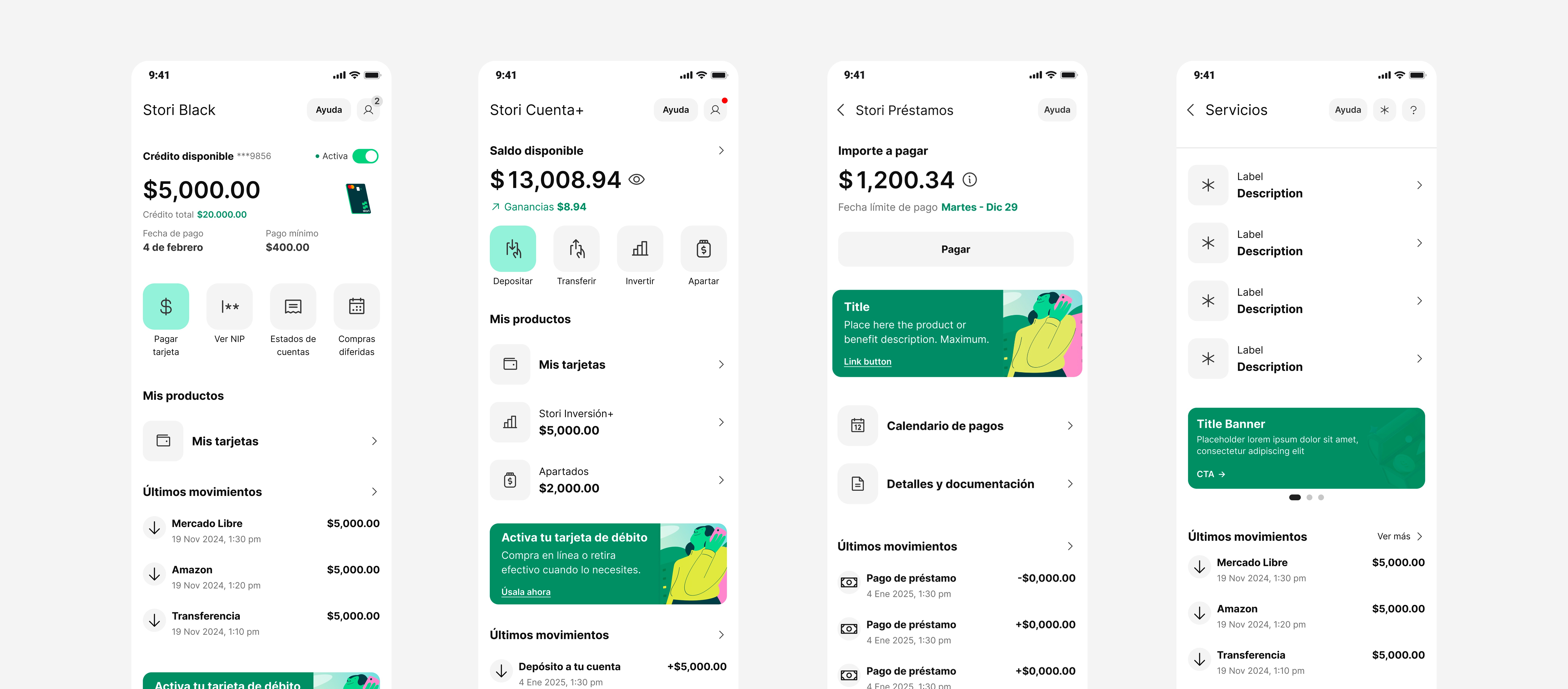
Challenge Our Design System had recently been simplified — a solid foundation, but one that lacked the compositional flexibility to sustain Stori’s growing product portfolio. Each squad designed in isolation, and without shared foundations, dashboards (the main entry point after product acquisition) looked like they belonged to different companies. We saw this not as a limitation, but as an opportunity to evolve the Design System — adding a layer of composition capable of supporting product complexity and visual coherence.
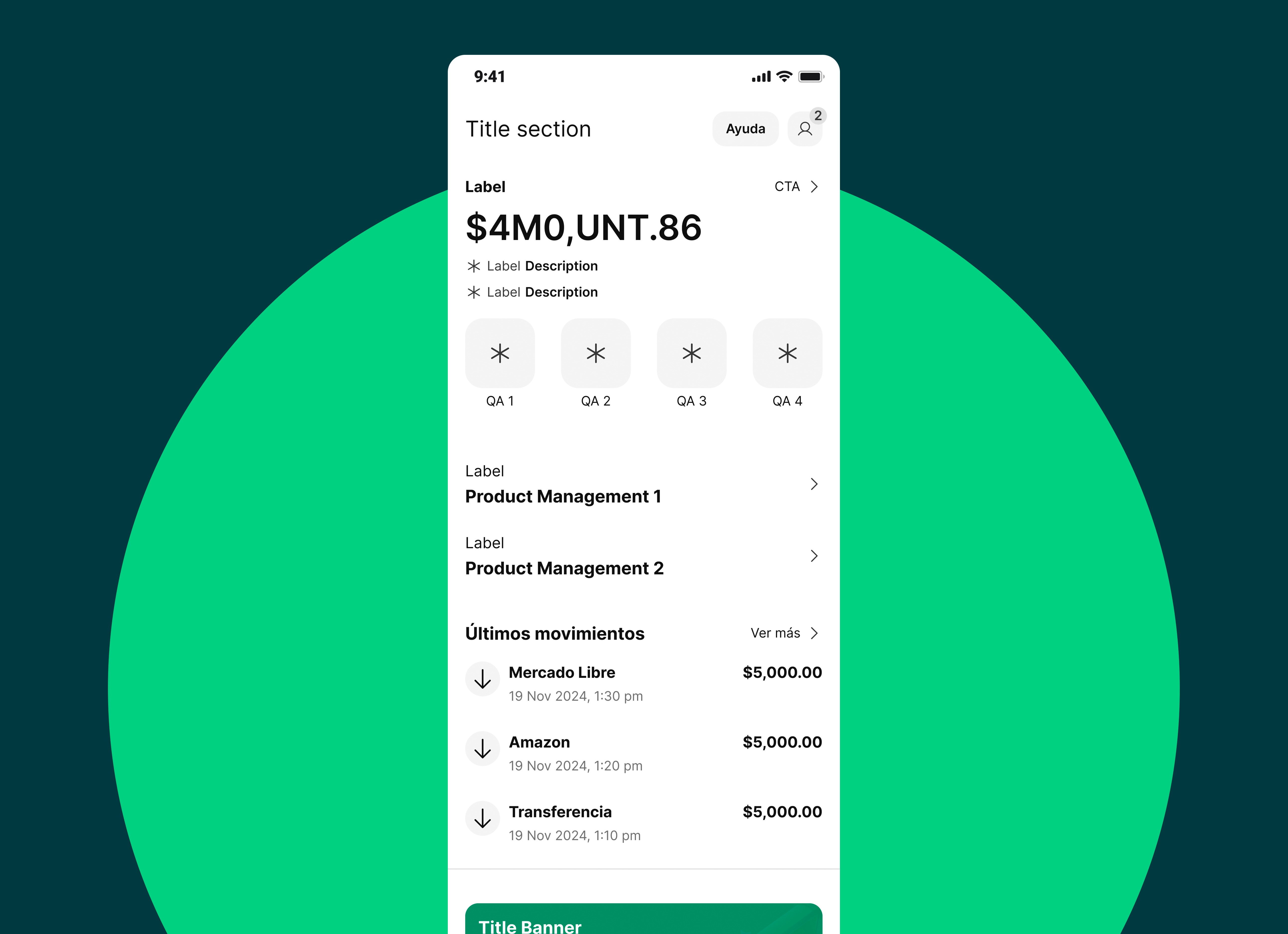
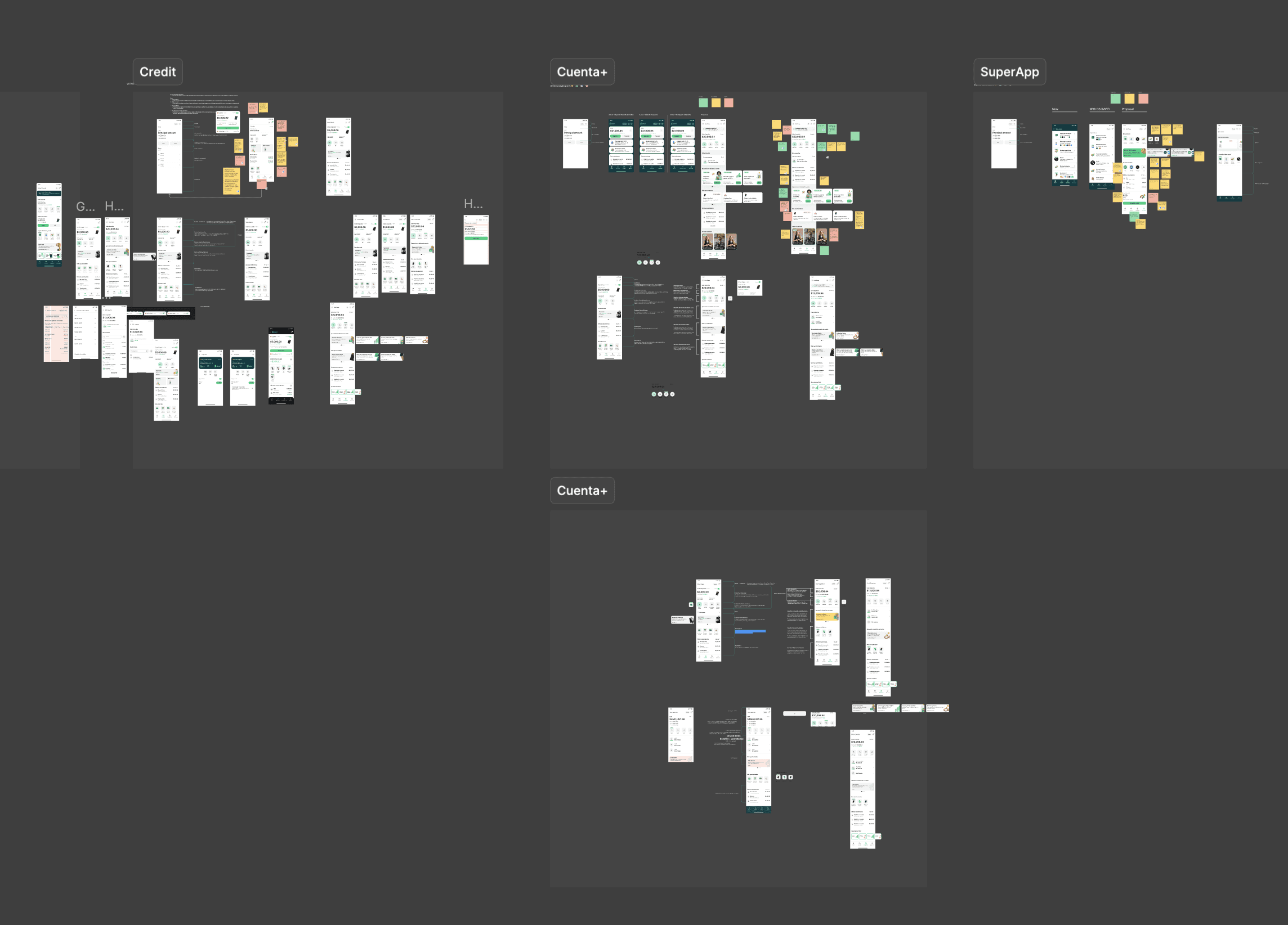
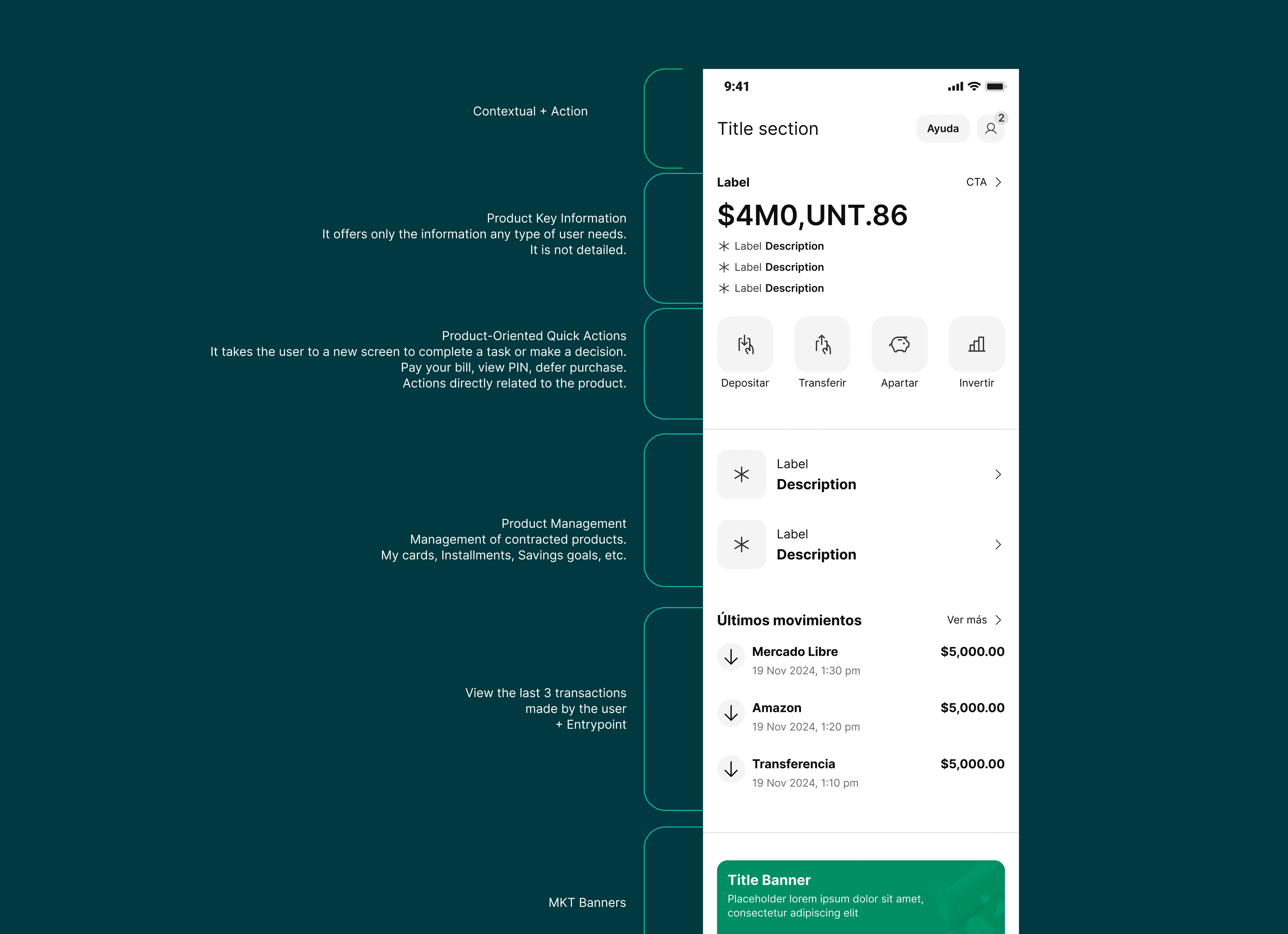
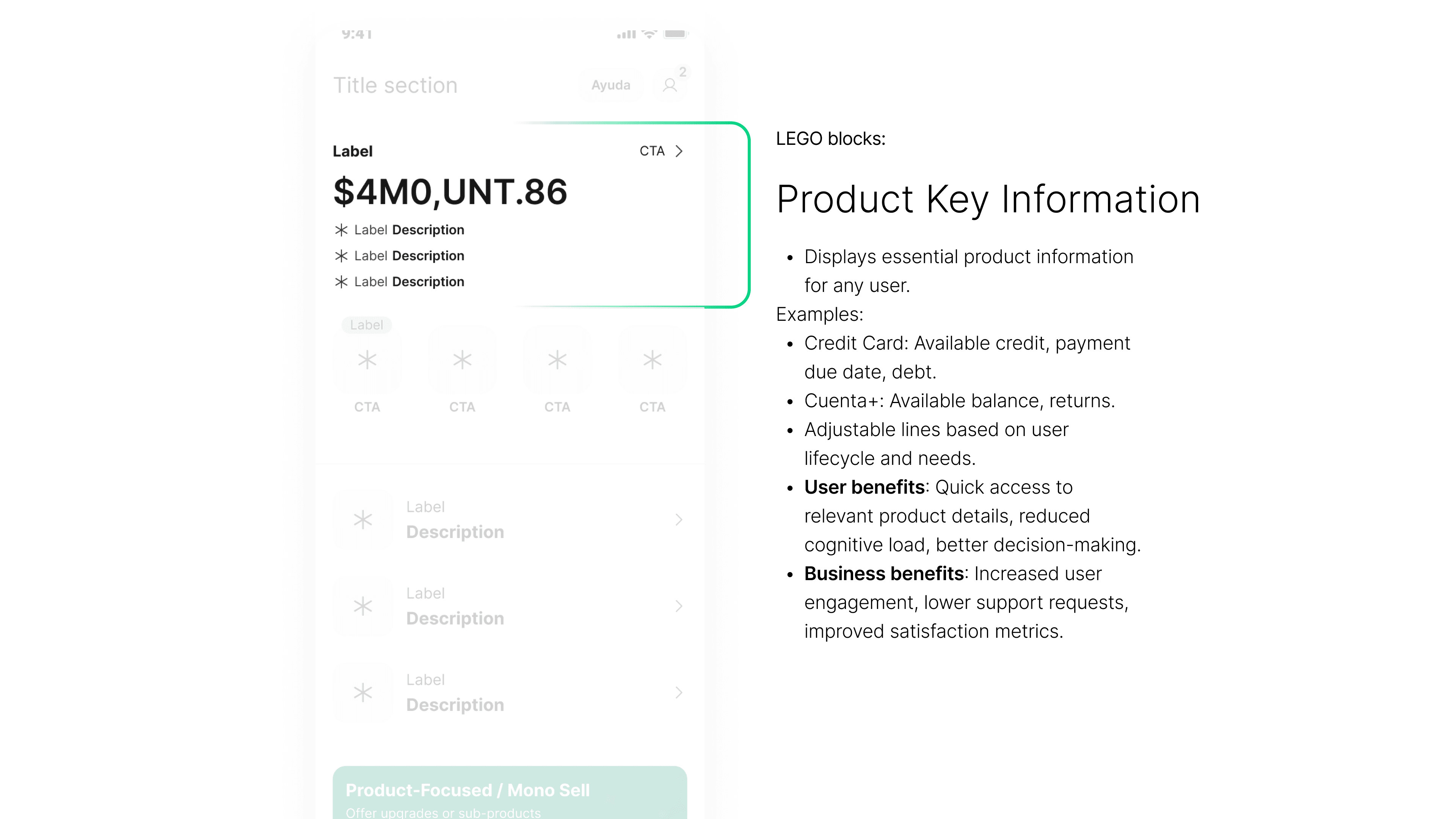
Process 1. Co-creation and horizontal design Each week, we met to explore, critique, and iterate freely. We mapped all dashboards, identified shared JTBDs, and defined what a unified Stori experience should feel like. Our guiding principle: “A design that unifies, not just beautifies — helping users move across products and feel in control of their financial journey.” 2. Architecture as alignment We built a modular LEGO-like system of five layers: Contextual + Action, Key Info, Quick Actions, Product Management, and Activity + MKT Modules — creating a reusable architecture later adopted by the Design System. 3. Collaboration beyond the crew Partnering with the DS Tech Lead, we turned these patterns into scalable front-end modules. This reduced dashboard implementation time by 40 % and cut 25–30 design hours per cycle, inspiring new initiatives like Payments, Movements, Profile, Settings, and Messaging.

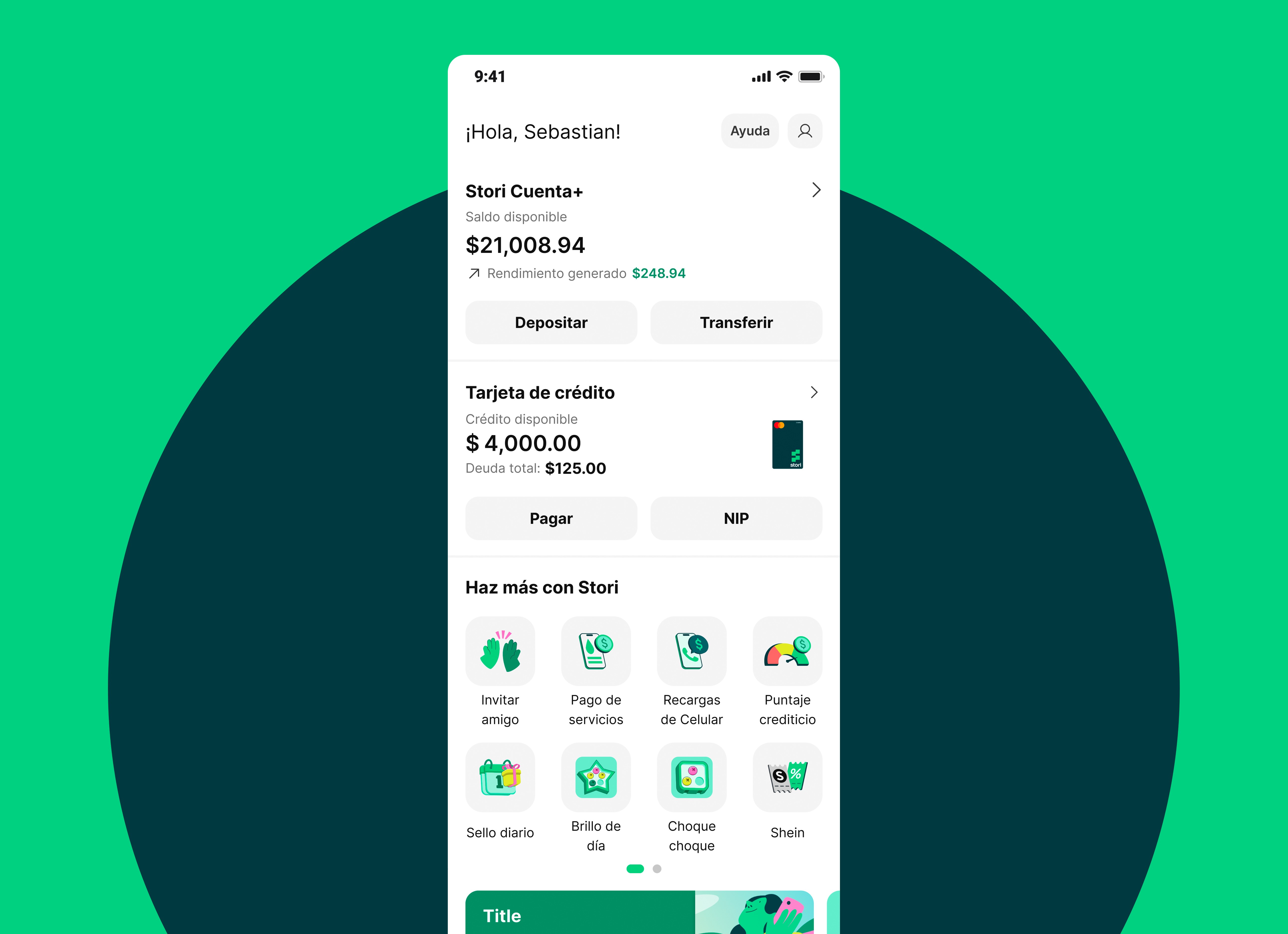
Impact What began as an informal design crew became an organizational movement — bridging gaps between products, disciplines, and people. Impact highlights: Sparked a company-wide “Unification” initiative shaping 2025 roadmaps. Cut design-to-dev implementation time by 40% through shared architecture. Reduced inconsistency and learning curve across dashboards. Reignited collaboration and creative energy within the design team. The new unified Home is now live, and its structure continues to guide how Stori designs for clarity and scale.
Design leadership isn’t always top-down — sometimes, it’s a spark that spreads. Unification Crew reminded me that culture is also a design system, and that the most powerful frameworks are built not just with components, but with people who care.