Making healthcare proactive
Company:
Sofia
Role:
Mid Product Designer
Location:
Mexico City
Date:
2022
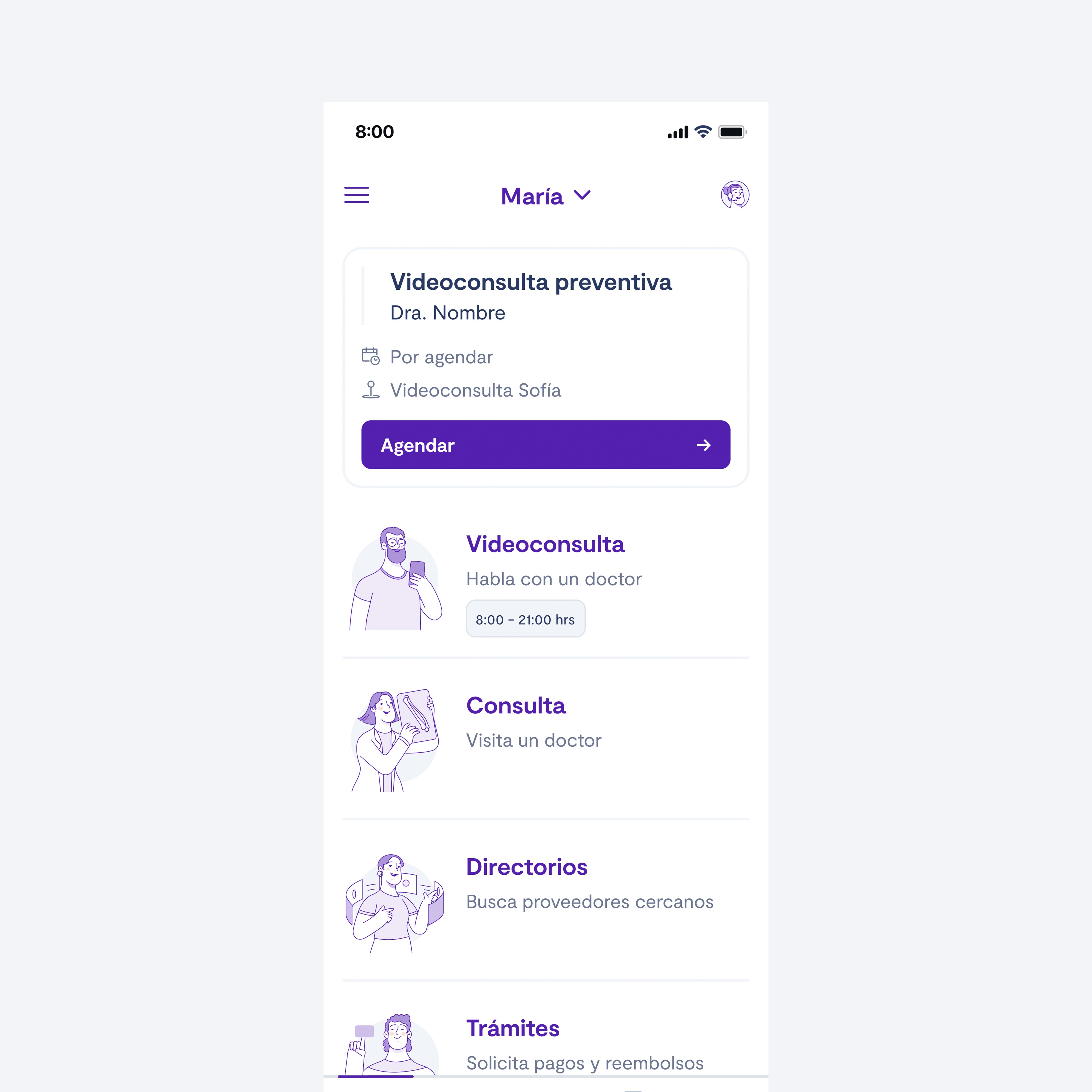
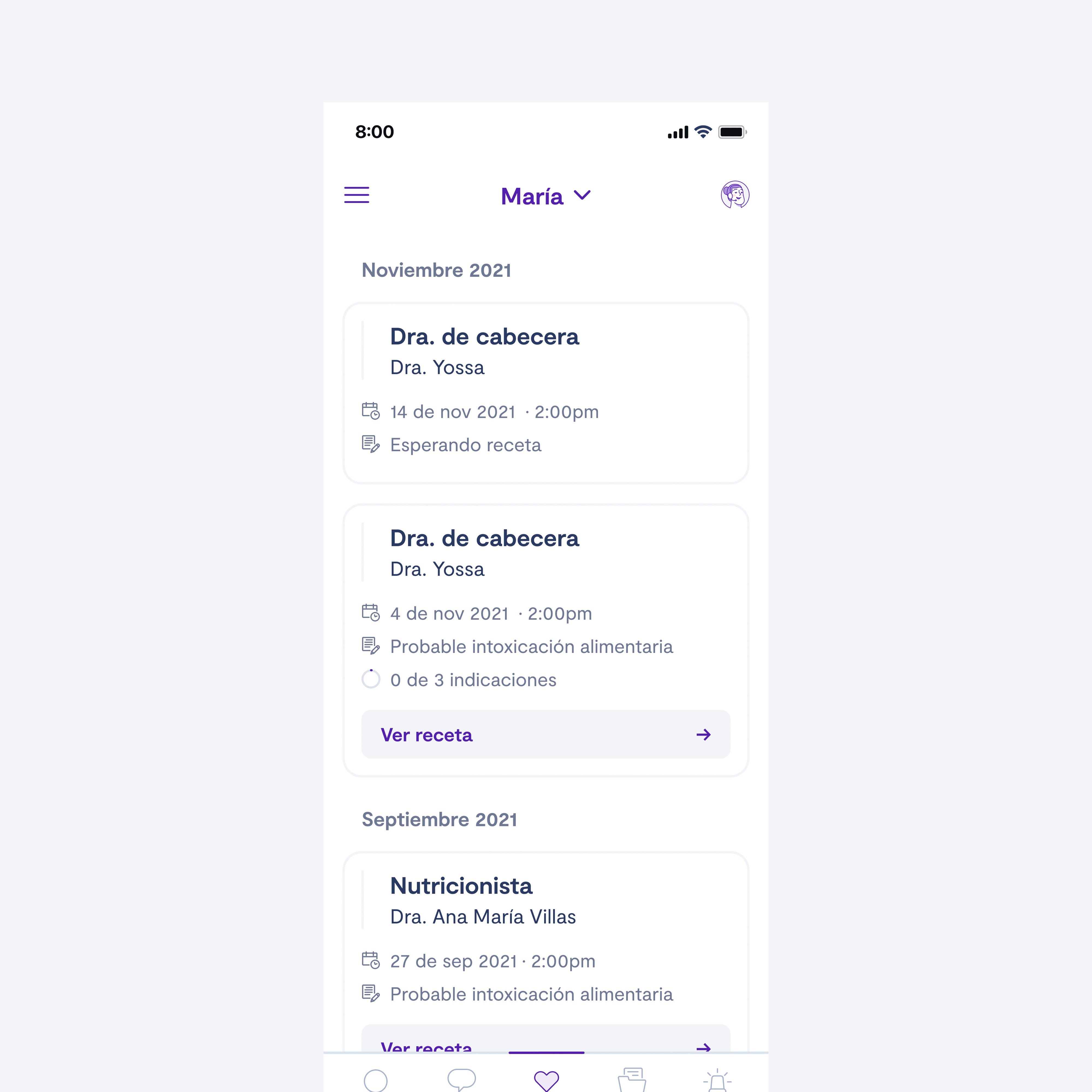
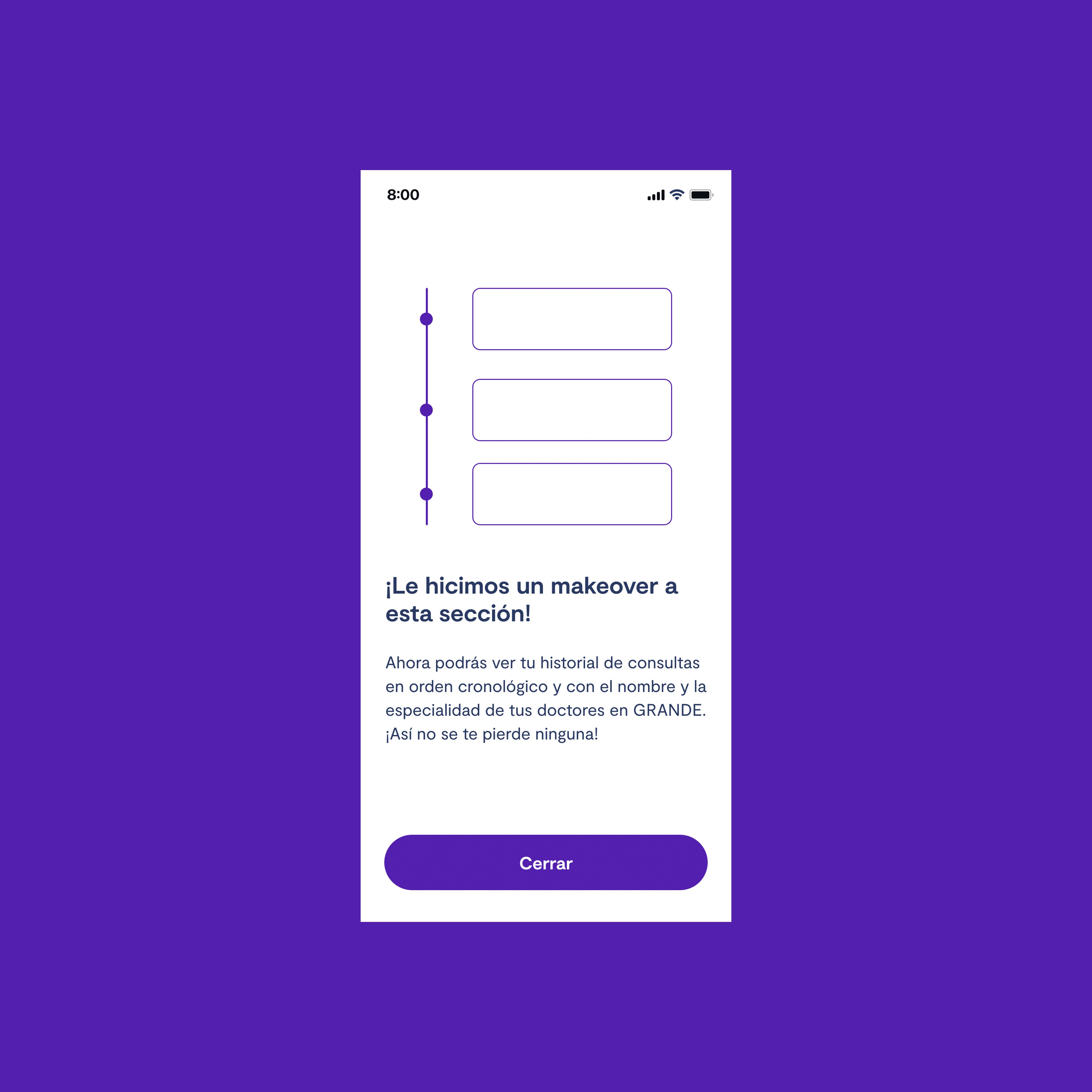
Sofía is a health-tech startup in Mexico that combines health insurance with digital care through video consultations, making healthcare accessible, simple, and human. This initiative aimed to increase preventive video consultations — encouraging members to talk to doctors even when they felt fine — while improving Mi Salud (My Health) as a single place to see past, active, and upcoming visits.
I was Sofía’s first Product Designer, shaping the product foundation and design culture alongside the CPO. For this project I led the end-to-end experience for Preventive Video Consultations and the redesign of Mi Salud section, working closely with medical advisors, data analysts, engineering, product, and research to balance empathy, regulation, and impact.

Challenge Most members only booked a consultation when they were already sick. Preventive care felt abstract or optional. At the same time, the business needed better visibility into undisclosed conditions, improving care and insurance decisions without making members feel “evaluated.”
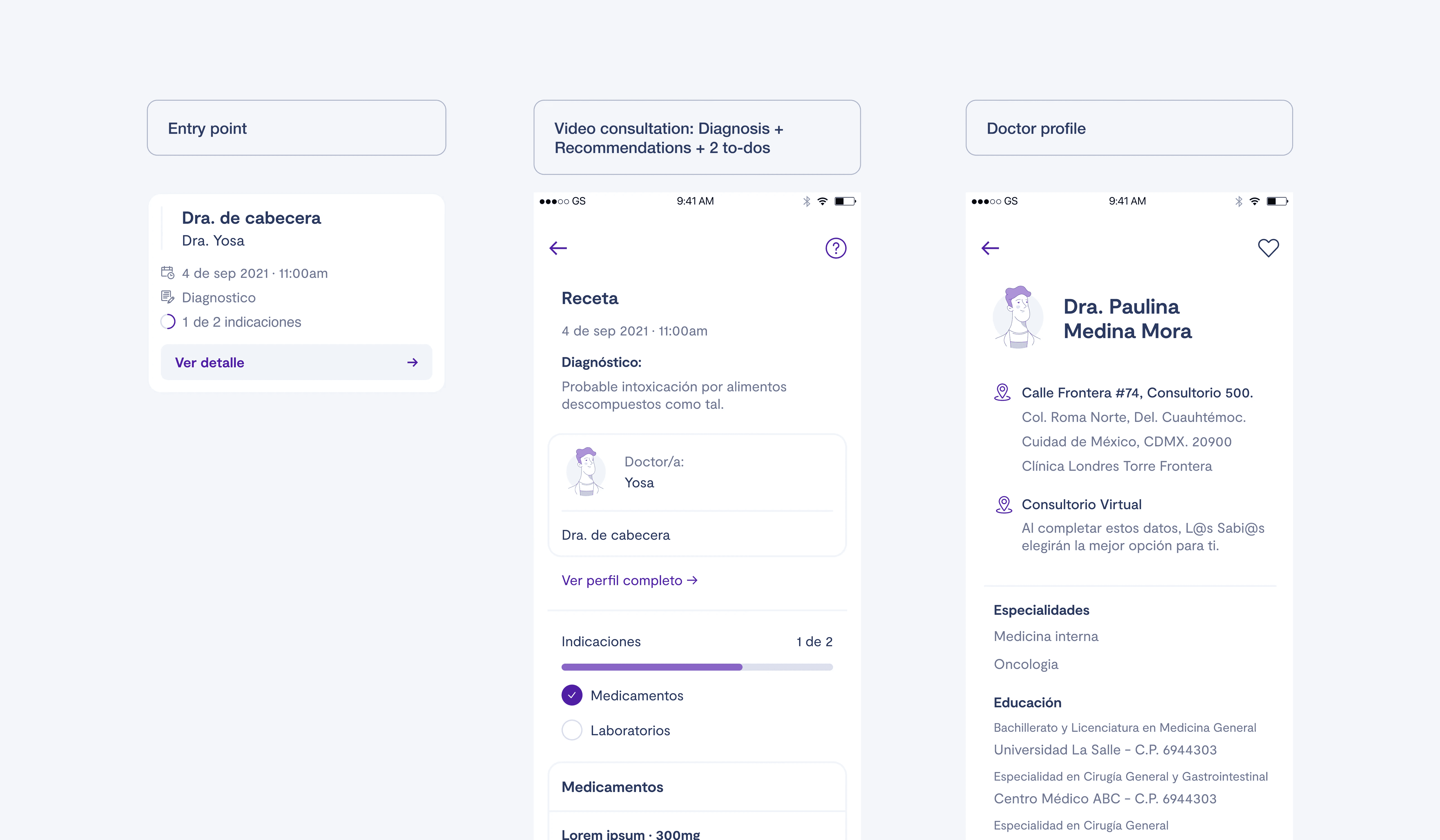
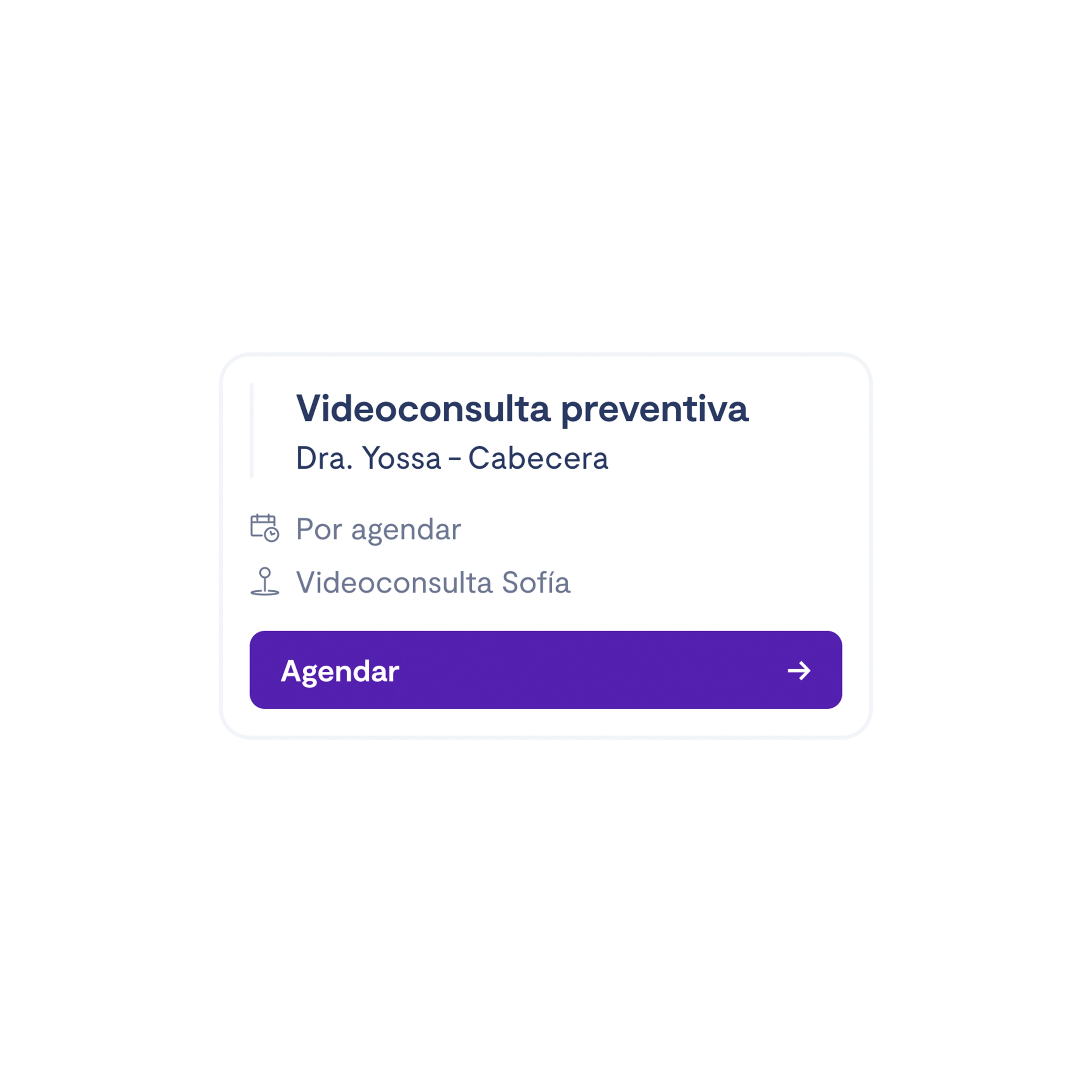
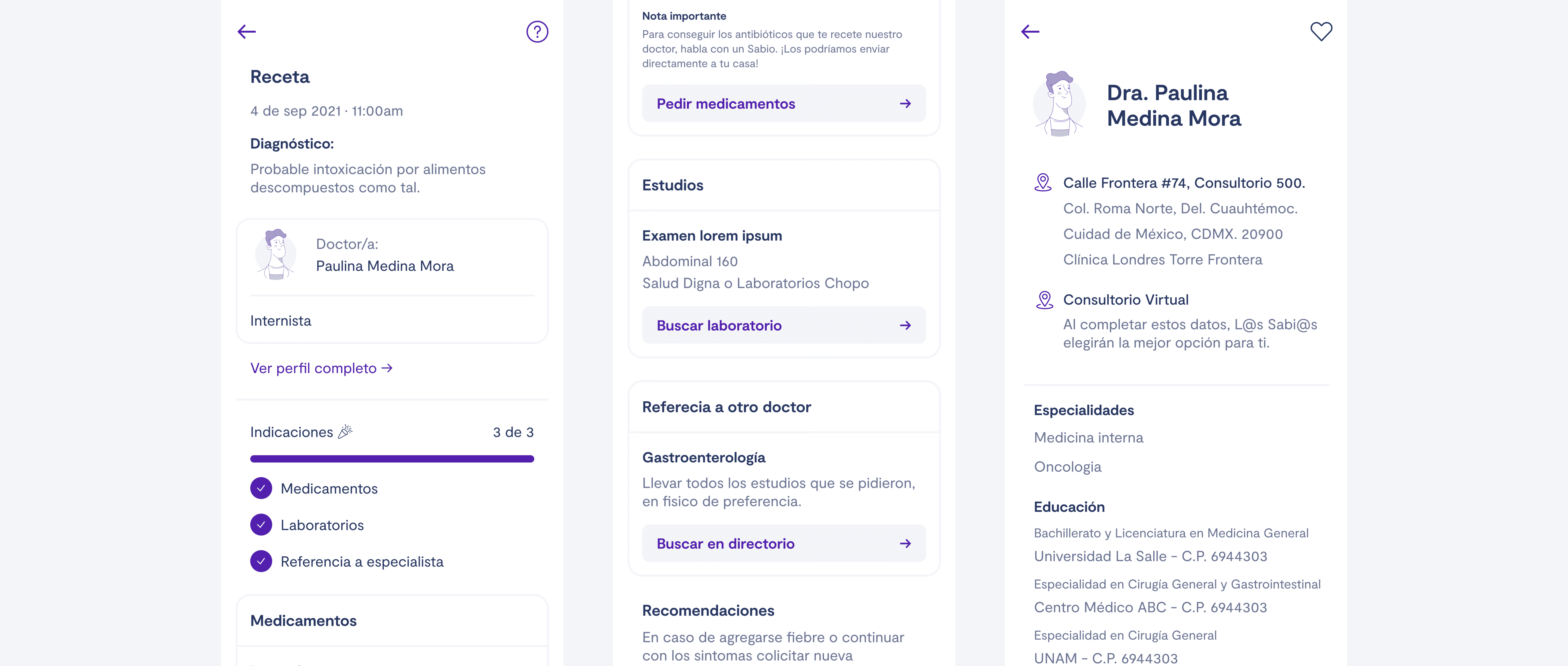
Discovery & friction mapping. We audited the full journey—awareness → scheduling → pre-visit confidence → follow-up—and surfaced the frictions behind “no action”: Awareness & relevance: “Why should I book if I feel fine?” Time/effort: perceived hassle in booking and preparing. Confidence & trust: uncertainty about what a preventive VC covers and how the doctor will help. Reframing the value. Instead of “another product,” we designed a new reason to care: proactive companionship. The entry point used warm, direct messaging (“Take care of yourself today — book a preventive check-up.”), and clarified what to expect before joining. Mi Salud as a system. In parallel, we re-architected Mi Salud so members could see their health journey in one place (past, upcoming, active), laying the groundwork for future proactive features: reminders, habit nudges, and longitudinal follow-ups. Medical & product alignment. I partnered with medical leadership to embed proactive scripts and pre-visit checklists (tailored to context) instead of purely reactive guidance—turning clinical protocol into clear, human language inside the flow. Instrumentation & governance. With Product Analytics and Eng, we defined Amplitude events and funnels to measure behavior across the lifecycle: discovery → booking → completion → re-booking (30/90 days), plus content interaction and satisfaction signals.


Results & Measurement Although the feature launched before complete data tracking was in place, internal goals and early projections estimated: ≈20–25% increase in preventive consultation bookings, measured through Amplitude event funnels. ≈15% higher completion rate compared to reactive consultations, driven by clearer pre-visit guidance. ≈10% rebooking uplift within 90 days, indicating habit formation around preventive care. Improved detection of previously undisclosed health conditions, informing both medical follow-ups and insurance coverage modeling. These metrics were designed and tracked in collaboration with Product Analytics and Engineering using Amplitude funnels and retention cohorts (D30/D90), while qualitative feedback from doctors and patients helped refine copy and pre-visit guidance.
Key Takeaways Working on preventive healthcare reminded me that good design often starts with reframing why something matters. People don’t need another feature; they need clarity and a reason to act before things go wrong. Building Mi Salud as the central space for follow-ups and proactive care showed me how design can connect small interactions into long-term habits — how one simple flow can become the backbone of a broader system for wellbeing. And finally, collaborating with doctors and data teams taught me that empathy isn’t just tone or aesthetics — it’s structure. It’s how we translate complex medical protocols into words and experiences that make people feel safe, understood, and in control of their own health.