Collateral Credit Line
Company:
Nu
Role:
Staff Product Designer
Location:
Mexico City
Date:
2023
Nu’s Credit Card Experience (CCX) team identified a recurring friction point: users with limited credit lines were frustrated and frequently contacted support to request increases. While Nu had strong credit products in Brazil, Mexico presented different realities — legal restrictions, lower financial literacy, and cultural nuances around credit trust and security. To address this, we designed a new way for users to grow their credit responsibly — through a Collateral Credit Line, where users could deposit money as a guarantee and immediately extend their available credit. The initiative not only helped users access more credit but also created a safer, low-risk model for Nu’s business in a highly regulated market.
As the Product Designer leading the Credit Card Experience (CCX) for Mexico, I was responsible for defining the product experience, interface, and communication architecture of the feature. I worked closely with Product, Legal, Tech, and UX Writing teams in Mexico, and collaborated with Design and Product counterparts in Brazil to translate their learnings into a localized framework for the Mexican market — adapting to cultural, regulatory, and linguistic constraints. Beyond design delivery, my role was to bridge cross-regional knowledge, establishing a localization process that allowed Nu’s global design system to scale across emerging markets.
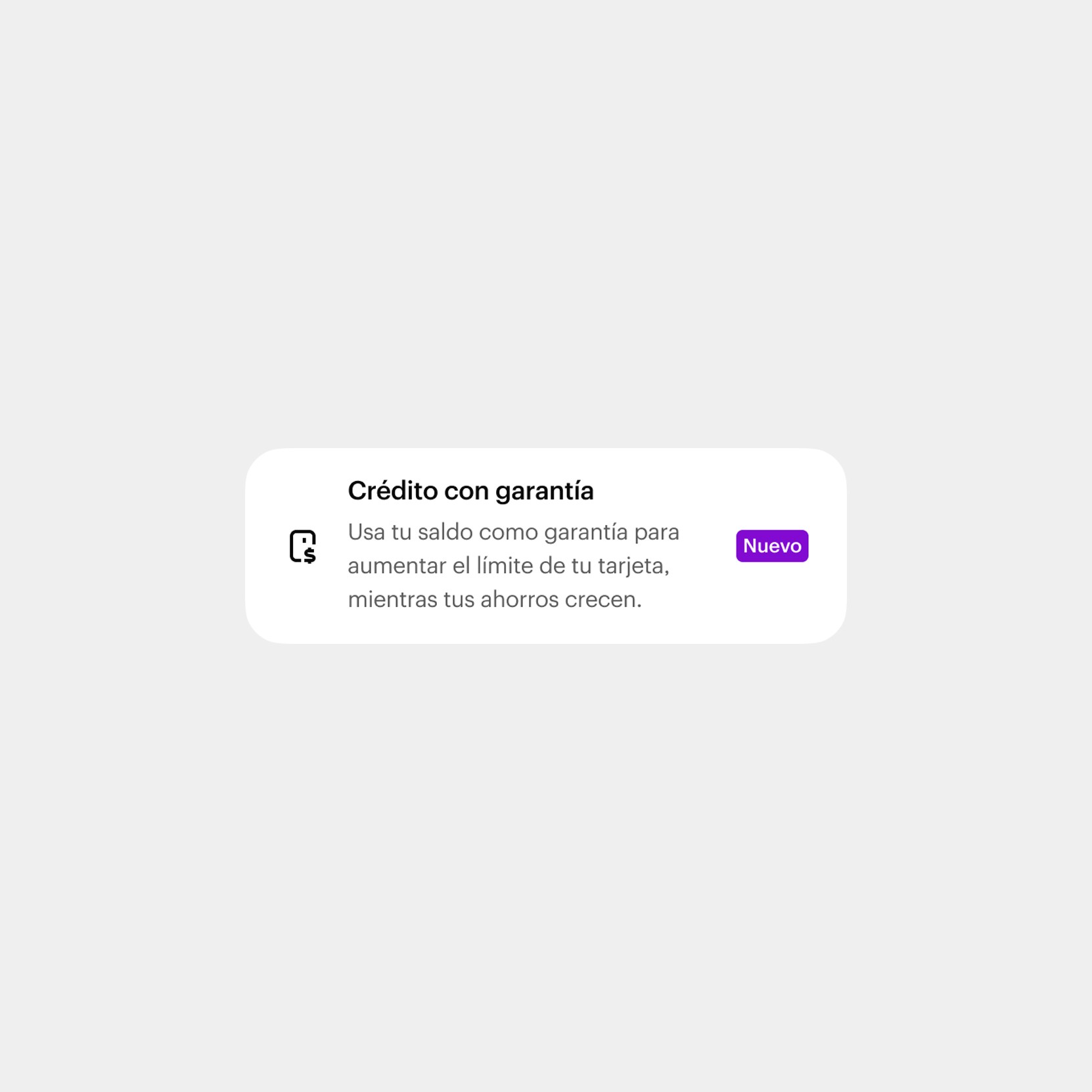
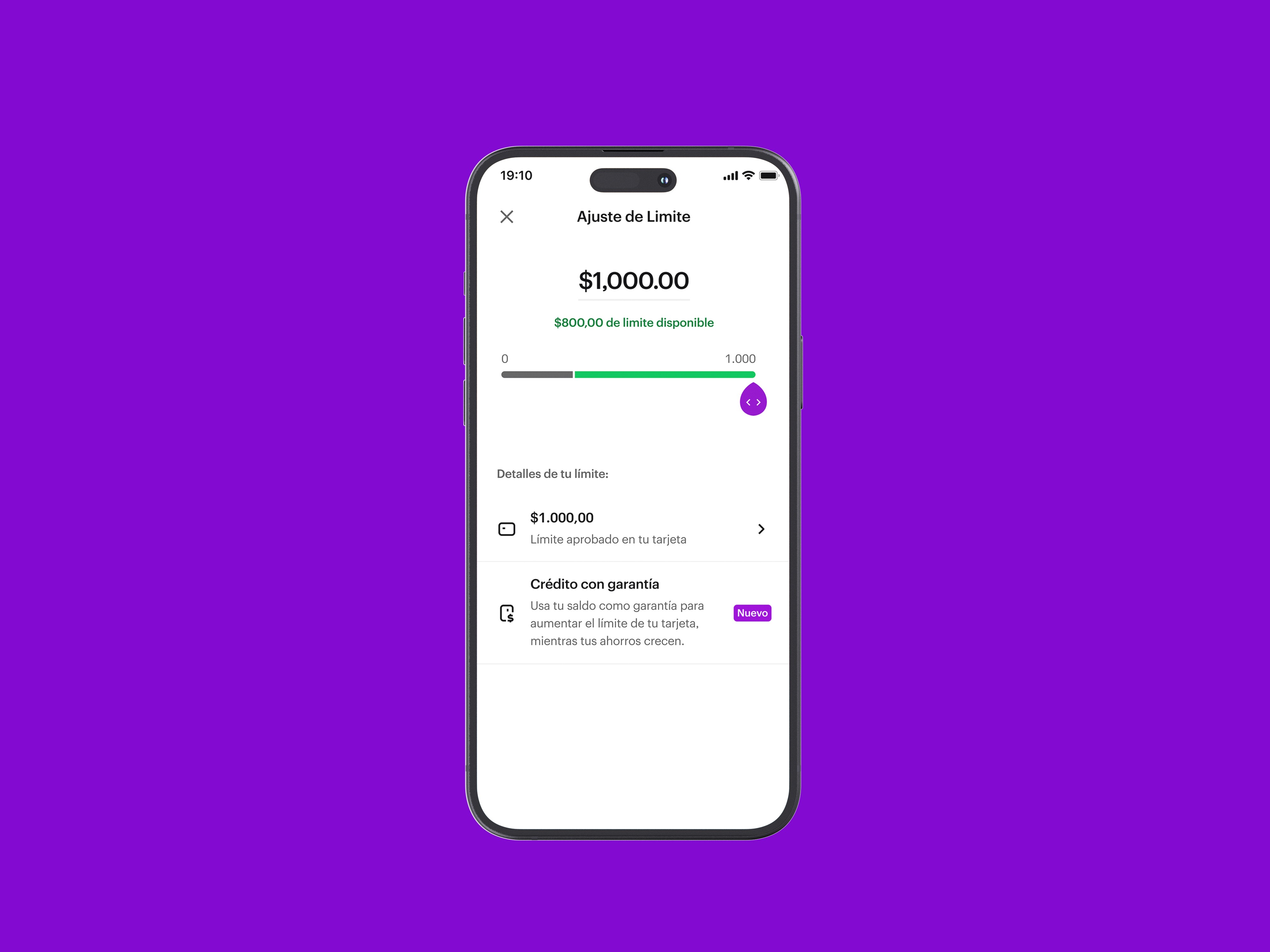
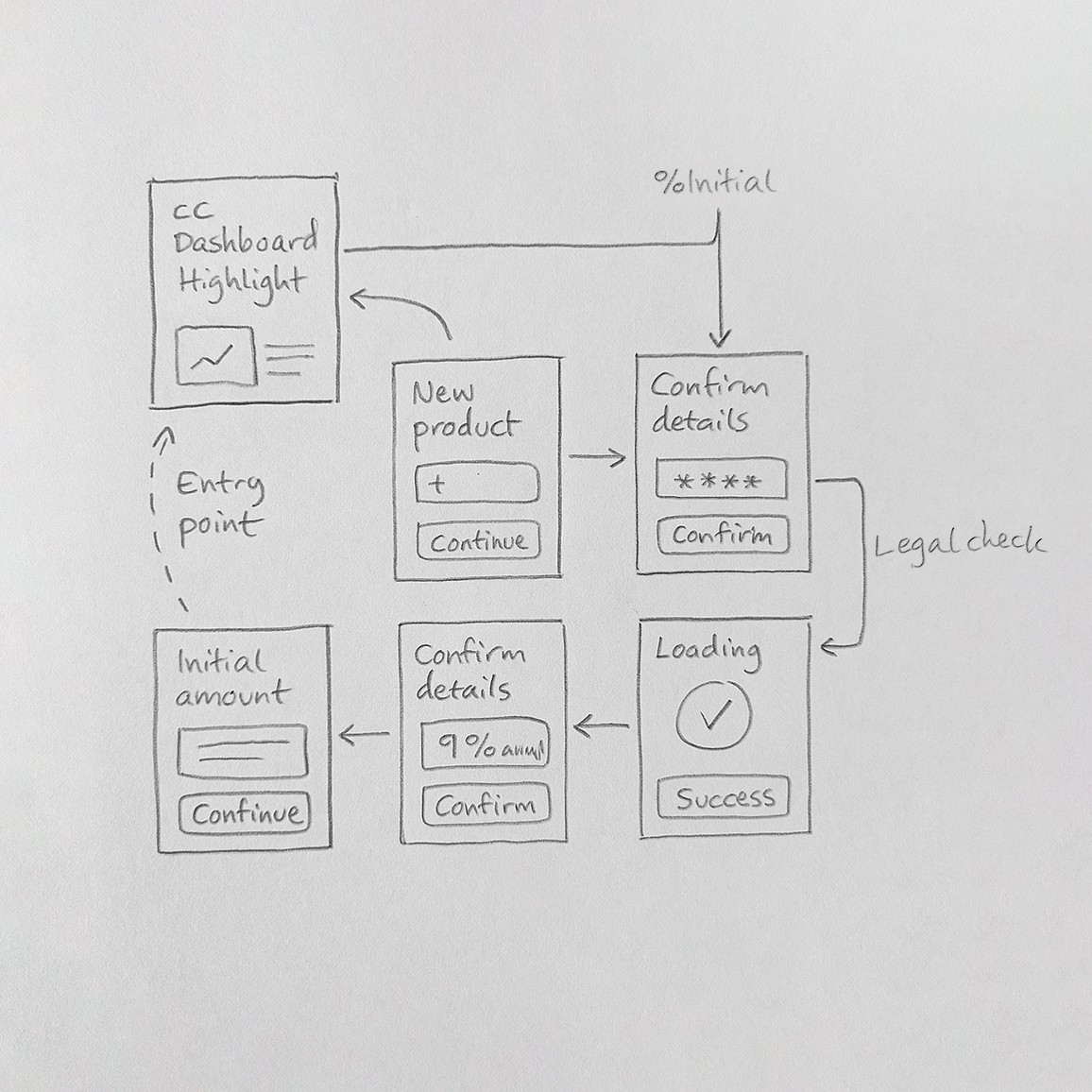
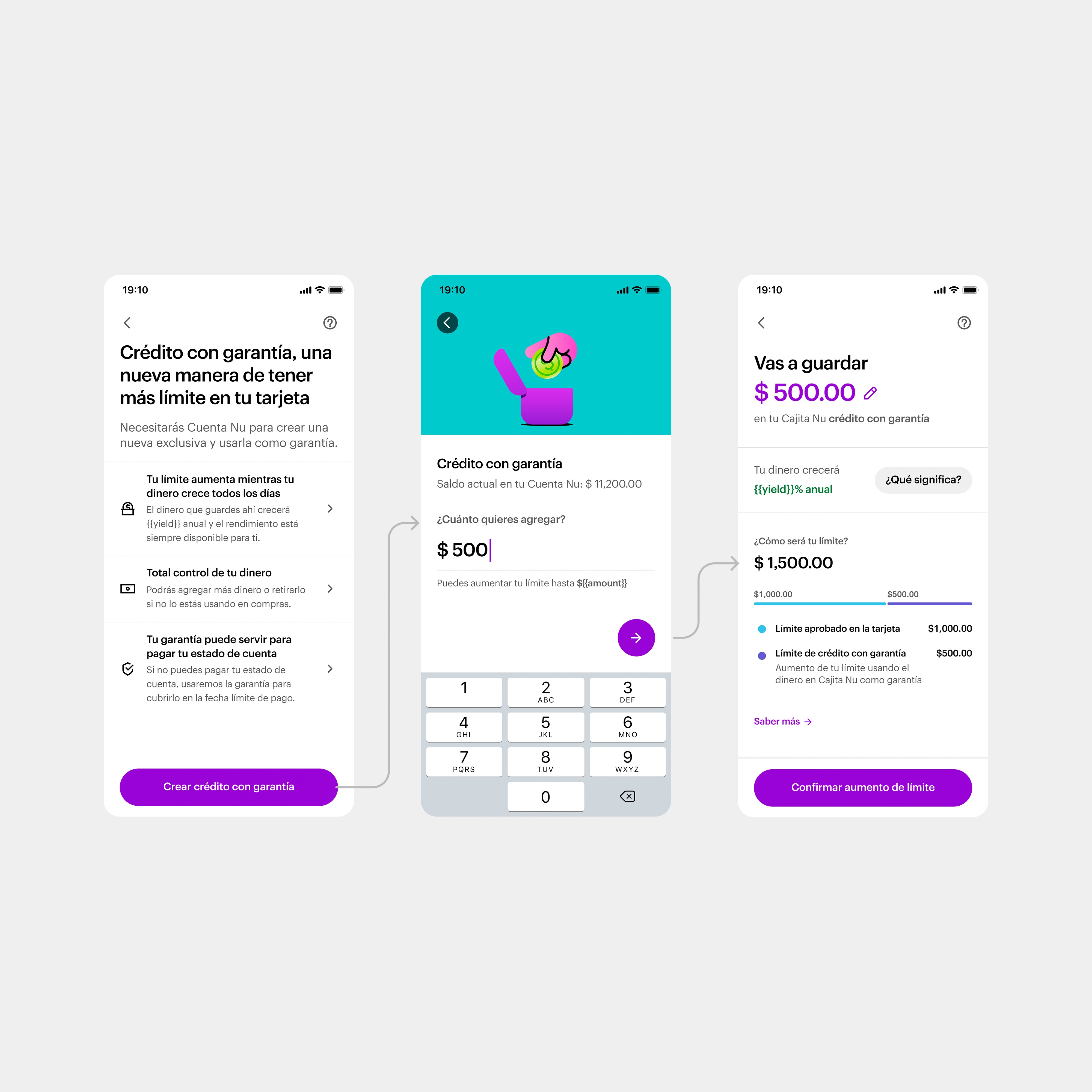
Challenge While secured credit cards were common in other markets, the idea of increasing one’s credit line by using personal savings as collateral was entirely new in Mexico. The challenge was to create an experience that: Built trust and transparency, turning a complex financial concept into something intuitive. Worked within strict legal and operational limitations, including multi-step authentication and contractual consent. Clearly differentiated this new “collateral credit” from the existing credit and savings experiences, without creating confusion.
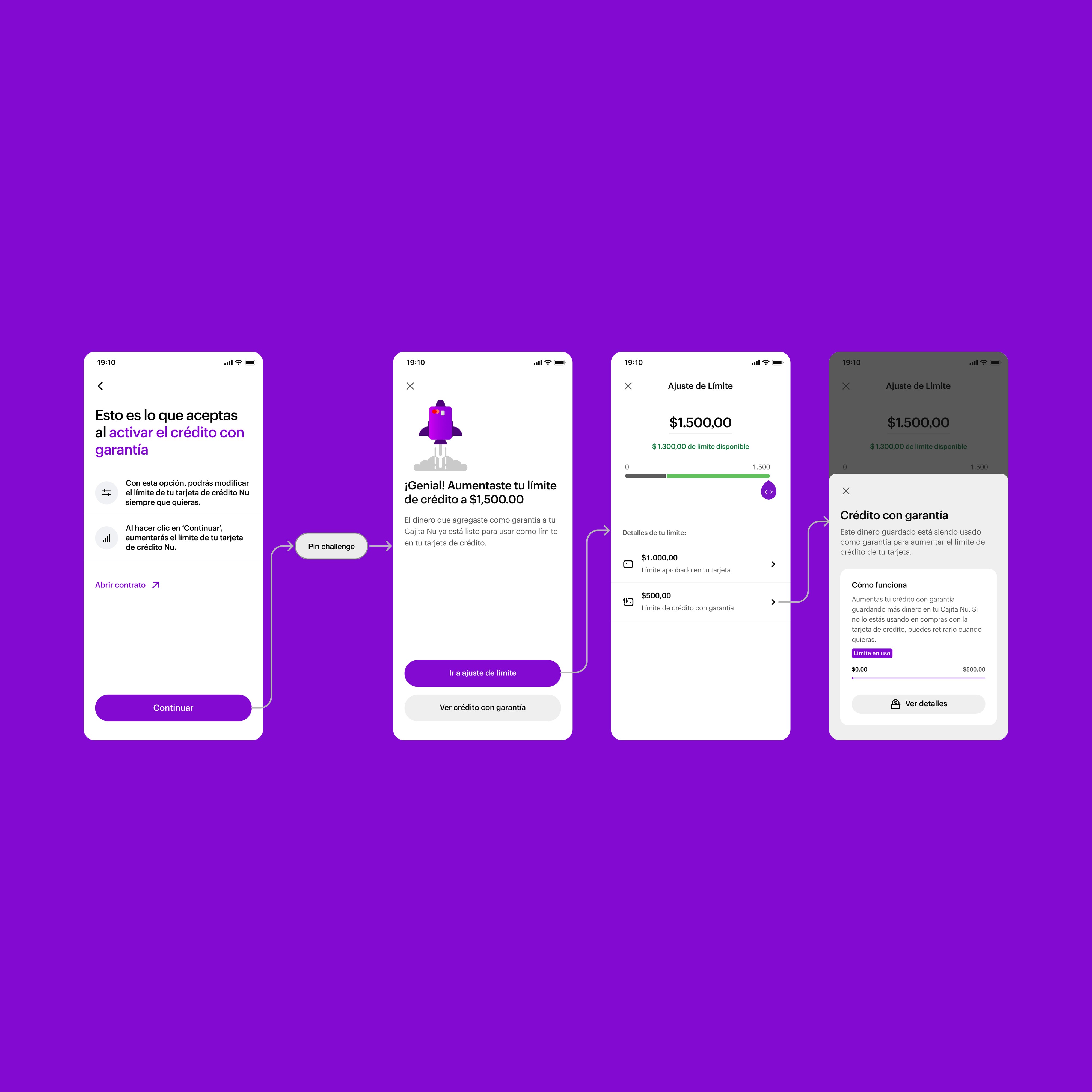
Process We started by mapping all touchpoints where users interacted with their credit line — limits, payments, and available balance. Using early insights shared by the Brazil CCX team, we adapted flows to Mexico’s local context, aligning with Legal, Compliance, and Engineering on what could be simplified, unified, or automated. One major improvement came from consolidating multiple authentication steps into a single confirmation screen, paired with transparent, contract-level messaging. We also co-developed educational content with UX Writing to explain the concept of “credit backed by savings” in simple terms — replacing the initial CTA “Saber más →” with “¿Qué significa? →”, which increased interaction and comprehension significantly. This small change became a new educational pattern within the app — a replicable framework for onboarding users into new financial behaviors or features through micro-learning entry points. Collaboration was central. I worked side-by-side with our UX Researcher to validate comprehension and emotional response, ensuring users felt in control and informed. And with Legal and Compliance, we designed communication flows that could operate within regulatory boundaries while still preserving clarity and empathy.
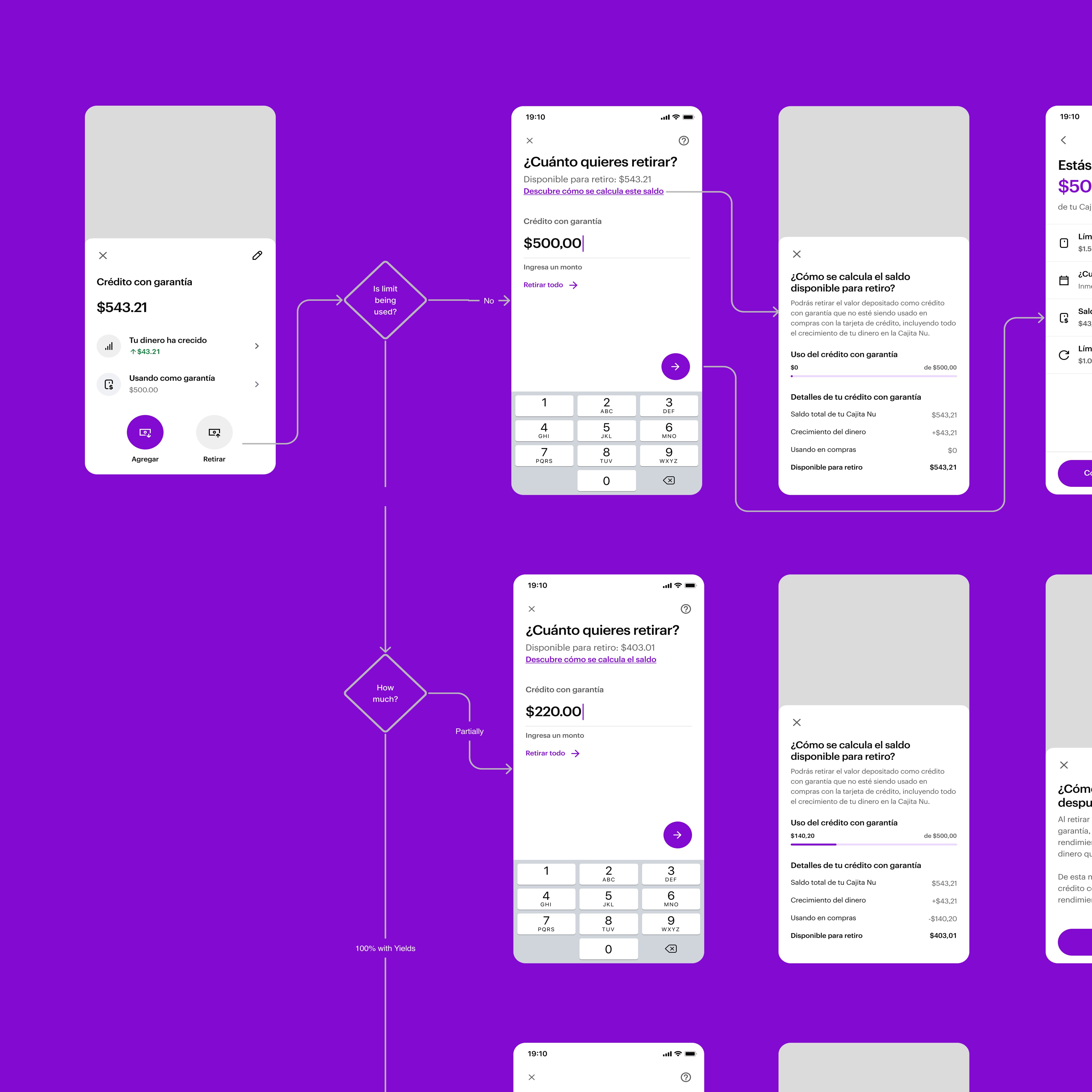
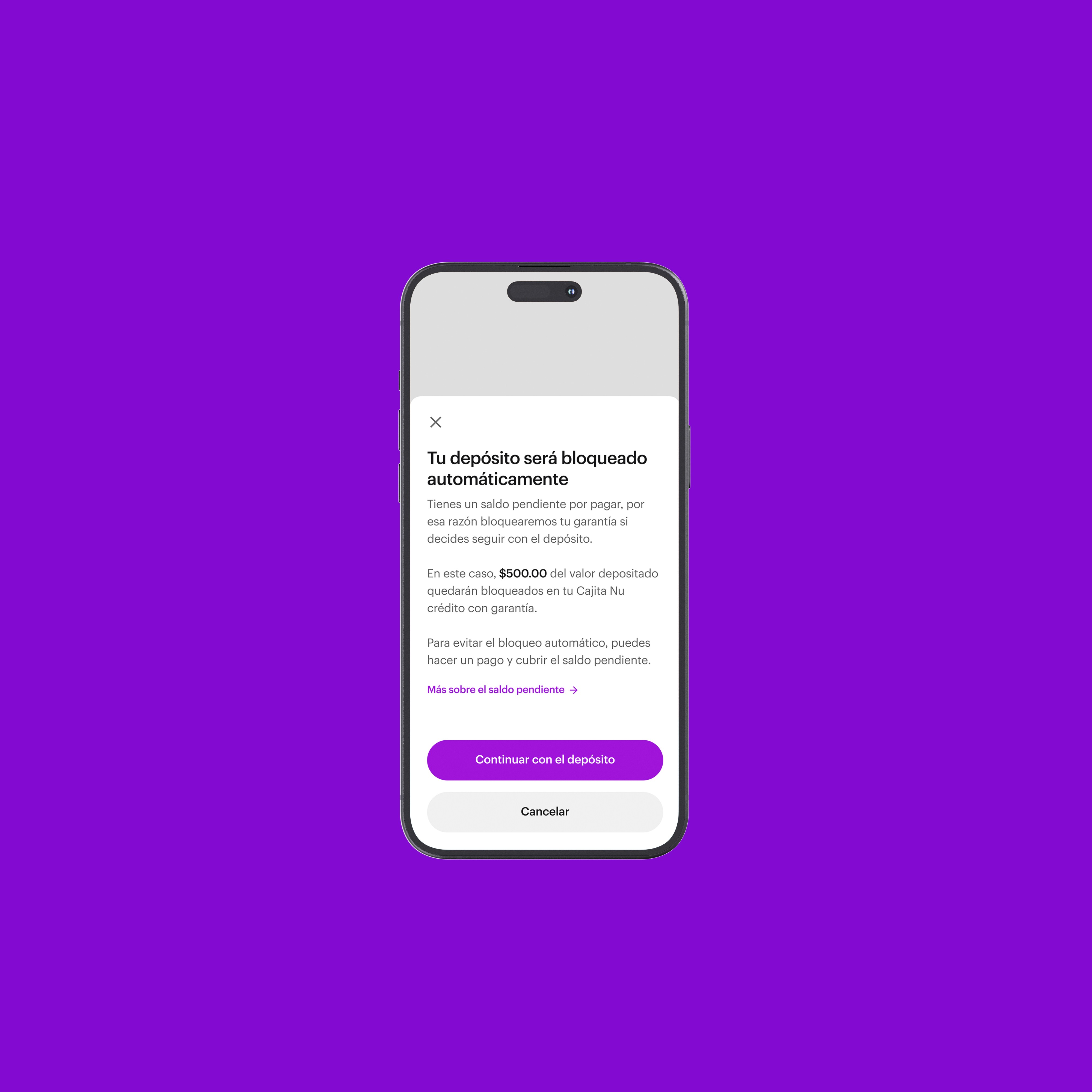
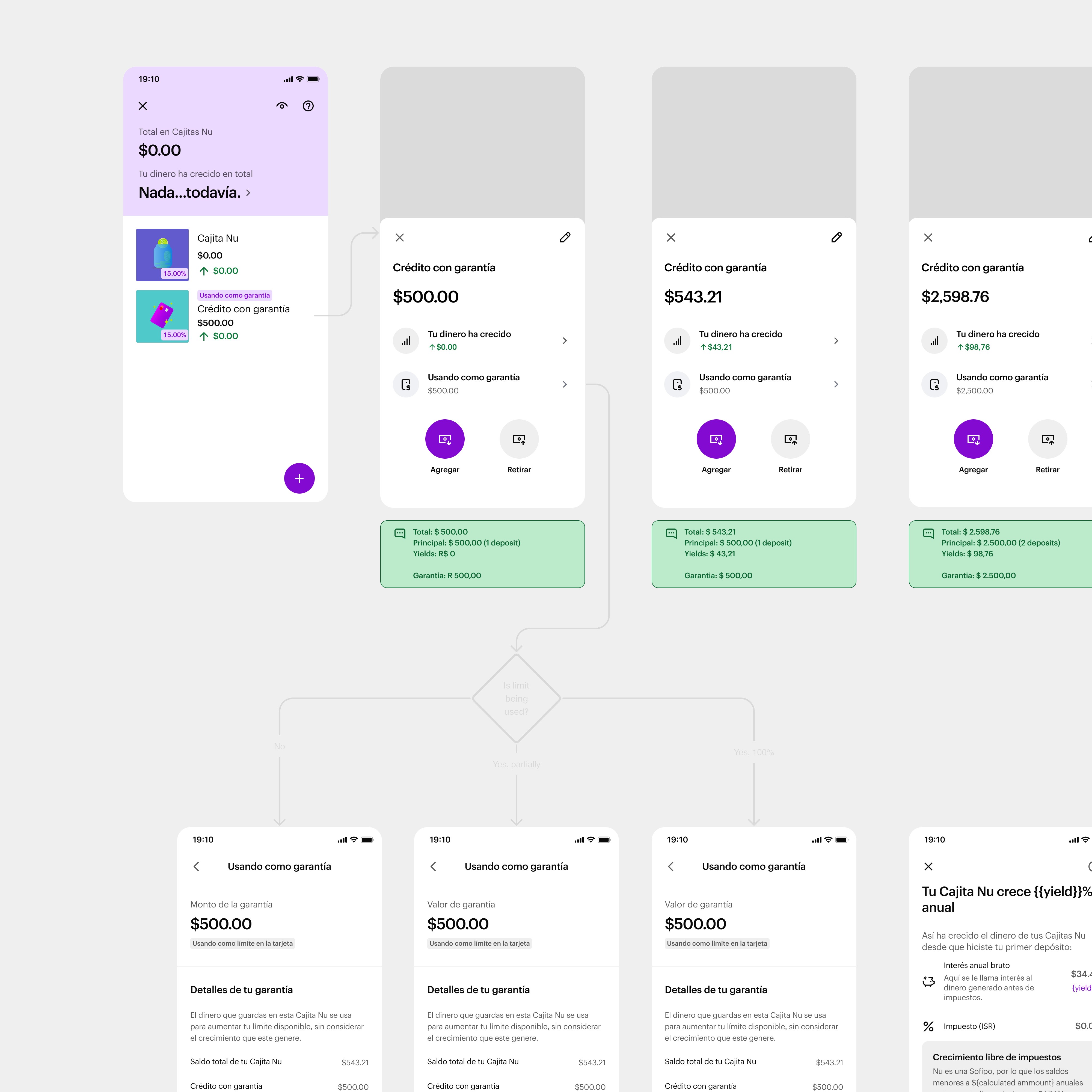
Impact Although the feature launched recently, early projections built in partnership with Business Analytics and informed by Amplitude data suggested: ↓ 25% reduction in credit-related contact rate, driven by clearer credit education. ↑ +18% increase in active credit users, expanding adoption through trust. +12pt improvement in NPS among users who activated the Collateral Credit Line. The project also delivered broader organizational impact: It became a reference for localized product design at Nu, influencing how global teams approach regional constraints and user education. The educational micro-copy pattern (“¿Qué significa?”) evolved into a scalable framework for product comprehension, later adopted across other product areas. The collaboration between Mexico and Brazil CCX teams laid the groundwork for a shared credit localization model, enabling future launches in other LATAM markets.
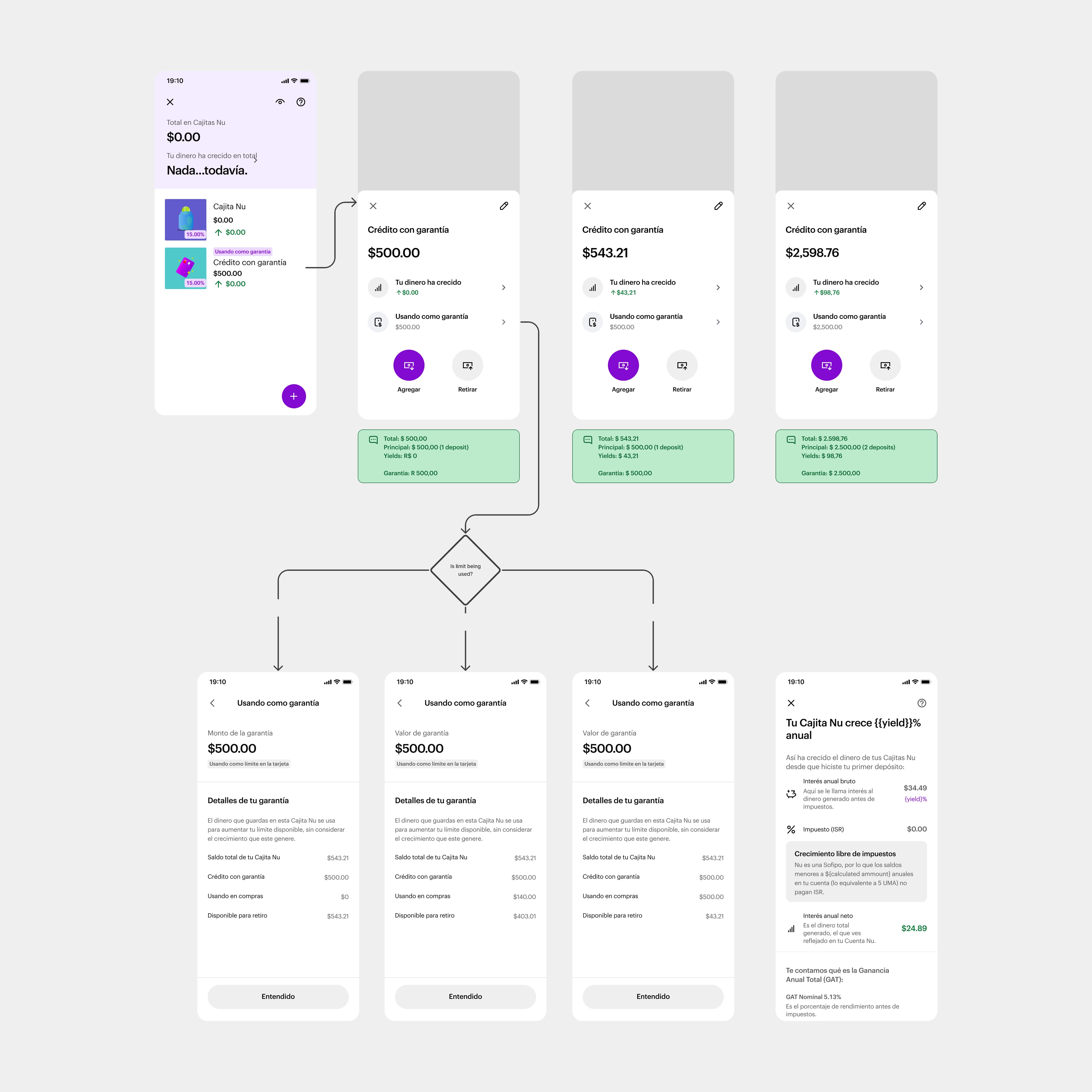
Design leadership is not only about crafting experiences — it’s about orchestrating alignment between teams, markets, and constraints. Through this project, I established a model for designing within regulation — turning compliance into clarity, and transforming a local challenge into an organizational learning opportunity. The Collateral Credit Line became more than a feature: it was a proof of how thoughtful design can scale trust, education, and responsible credit across an entire region.